Celebrity Hair Loss - Andre Agassi


When Andre Agassi hit the courts as a professional tennis player at the age of 16, there was no sign that hair loss would ever be a concern for one of the most beautiful bald celebrities.
Read More...
[Source: hair loss - Google Blog Search]

Hair Loss Treatments For Thinning Hair | Hair Loss Product Reviews

Using hair loss treatments for thinning hair has a combination of results, depending on the hair loss treatment that you use and the reason that you are experiencing thinning hair. Making sure that your diet is adequate is often the ...
Read More...
[Source: hair loss - Google Blog Search]

Ways of Avoiding Hair Loss

This section of writing is all about avoiding hair loss and if you read it with awareness you would find it very much helpful to you in your life. Our objective is to offer you good information on avoiding hair loss and if you can make use of the information offered, you can certainly benefit from it.

Who doesn't feel better on a 'good hair day'? Sometimes they come right out of the blue - often just as soon as you make up your mind to get a new cut or color because you can't do anything else with it! Why is it so hard to get your hair to do what you want?

The mysteries of maintaining beautiful hair should have been uncovered by now, but for many women finding a simple way to keep their hair looking wonderful is as elusive as it was to women centuries before.

The desire for beautiful hair is not new. Ancient Egyptians shaved their heads and wore elaborate, heavy, braided wigs to achieve perfection. European history also abounds with torturous hair styles including the ornate, powdered styles wrapped around frames and horsehair which attracted vermin. All in the name of beauty.

Today, fashion still influences a woman's hairstyle but that doesn't mean you have to subject your hair to needless damage. Take advantage of the tips below on caring properly for your hair.

WASHING AND CONDITIONING

Hair is not a living part of your body. However, your hair still needs proper care for optimum health and beauty. One of the key elements to having shiny, healthy hair is to allow the natural oils in the scalp to lubricate it. The hair closest to the scalp benefits from natural sebum oils the most while longer hair can become dry and brittle from a lack of these oils.

Shampoo, no matter what exotic ingredients it's made up of, performs a simple job of removing excess oils, pollution and styling product build up from the hair. All of your hair needs gentle cleansing but it is the top two or three inches that is most weighed down with natural oils and dulling hair products. Concentrating the washing in that area will reduce the amount of oils removed from longer areas of hair which can be over dried from the stripping of oils and extended contact with shampoo.

Conditioning on the other hand should be used sparingly, if at all, on the top inches of the hair while concentrated on the ends. Conditioning is an important step to replace needed oils and provide protection from styling agents such as blow dryers and irons.

STYLING

Your hair will look its most beautiful when you choose a style that requires the least amount of heat and product damage. Protecting your hair with conditioners is key, but choosing a style that suits the texture of your hair will eliminate the need for more torturous styling tools.

Frizzy and dry hair can benefit from the application of silicone based products. Bear in mind that a little goes a long way and concentrate the product on the ends of your hair.

When blow drying keep the blow dryer at least six inches from your hair to prevent excessive damage from the heat. Blow drying in the direction of the shaft (down the length of hair) will create a smoother appearance.

COLORING and PERMING

Anytime you use chemicals in your hair you should make sure your hair is in a healthy condition before applying the treatment. Overuse of these treatments can damage hair beyond repair and affect the results of the products.

CUTTING YOUR HAIR

Your hair will look shinier and feel thicker when you remove dried and split ends. Trimming the hair every 6 to 8 weeks will keep it looking its best.

Taking straightforward steps to preserve healthy hair will put you on track to more 'good hair days' than you ever thought likely! It is for certain that you are concerned about avoiding hair loss and that is why you decided to read this piece of writing. Now that you have finished reading this commentary, do you feel you have gained something valuable for the reason that only then our effort would be rewarded.

Scalp Hair Loss | New Millionaire League Article Directory

Male baldness can prove to be a traumatic and disheartening experience for some. With some conditions taking men by surprise, various forms of alopecia can cause depression and lower self-esteem. But what are the psychological effects ...
Read More...
[Source: hair loss - Google Blog Search]

Is Hair Transplant Excruciating?

Numerous persons who think about having hair transplant surgery question if the procedure is excruciating. Frequently individuals have thin-skinned scalps and the thought of somebody making cuts there seems hard to think about for them. There is divergence as to whether hair transplant surgery is excruciating, however.

Some say that hair transplant surgery is similar to a visit to the dentist. This does not seem like a description of something that is pain-free. It certainly does not seem like a relaxing experience. Yet some feel that there is that degree of pain involved.

The injections of the local anesthetic into the scalp before hair transplant procedures are definitely painful to some degree. Anyone who has had a tooth pulled knows that, if the tooth is deadened properly, it is not the tooth-pulling that hurts. It is the needle going in with medication to numb the tooth that is the real agony.

Of course, to follow the dental analogy, after the numbing wears off there is plenty of pain where the tooth was before. With hair transplant surgery, there is pain after the surgery as well. Swelling is normal after hair transplant surgery and can even keep you away from work. Your skull may feel very unusual for weeks.

However, the pain of hair transplant cannot actually be compared to a tooth extraction. Hair transplant pain is decidedly less sharp and some do not even feel it as pain at all. Many people simply feel it as an uncomfortable feeling. If they do feel any pain, it is of a degree that can be taken care of with a few doses of Tylenol.

On the other hand, some people who have had hair transplant procedures done do not feel that there is any pain involved at all. They tolerate the injections of the local anesthetic well. They are not bothered at all by the procedure. In fact they often watch television or read magazines, being awake and alert the whole time.

Hair transplant surgery is surely less painful than it was in earlier times when larger sections of scalp were excised. This involved more cutting to take out the donor hair and more cutting to insert the donor hair into the recipient site.

Hair transplant surgery was a very painful procedure in the past. Not all doctors today have given up on older methods. This is one reason why you should ask a lot of questions when you look for a hair transplant surgeon.

Up-to-date techniques for hair transplant use only the follicular unit and not a large amount of surrounding tissue for the donor grafts. This cuts down considerably on the amount of pain experienced. The procedure is minimally invasive now, so that no more of the scalp is disturbed than is necessary.

As a final point, having a hair transplant with a skilled and trained surgeon is a significant answer to having a less excruciating surgery. A surgeon who knows the best way to do the procedure will produce you less pain an turn out a better outcome for you into the deal.

Why Hair Turns Gray Is No Longer A Gray Area: Our Hair Bleaches Itself As We Grow Older

Wash away your gray? Maybe. Scientists have now solved a mystery that has perplexed humans throughout the ages: why we turn gray. These researchers show that going gray is caused by a massive build up of hydrogen peroxide due to wear and tear of our hair follicles. The peroxide winds up blocking the normal synthesis of melanin, our hair's natural pigment.
Read More...
[Source: ScienceDaily: Hair Loss News]

What are the Fundamental Causes of Hair Loss?


Causes of Hair Loss
It is our sincere hope that you find all that you wanted about hair loss in the following article. Just savor the information provided and make use of it. If you are the type of person who loves reading about hair loss, you would surely find it worthwhile to spend time in reading this article that is being presented here.

The question is, why do some men keep their hair well into old age while others begin losing their hair at a young age?

A Genetic Problem?

For the majority of men who are losing their hair before they'd like to, the response is genetic. Hair loss, like eye color, is an innate characteristic. While you were still forming in the womb, your hair follicles were being genetically coded. If genes responsible for hair loss were there, they made the hair follicles on top of your head susceptible to the hormone dihydrotestosterone, or DHT. These follicles were then inclined to begin shrinking when you reached adulthood.

Regrettably, once this genetic process starts, it will carry on all through your lifetime. As the hairs produced by your ever-shrinking follicles become finer and finer, they will begin failing to grow to normal length. And what is first noticed as "thinning hair" or a "receding hairline" progresses to baldness when the shrinking follicles finally stop producing any hair at all.

Popular Misconceptions

For many years our schools have taught — quite erroneously — that hair loss is always inherited from the mother's father. Medical science now knows that baldness genes are passed down from both sides of the family. They also can skip generations, and are utterly random in terms of which siblings they will affect; it is quite common for a man keep a full head of hair while his brother goes bald in his twenties.

How Important Is Hair Care?

In contrast to widespread belief, hair loss is not caused by a failure to take good care of your hair. People waste millions of dollars on shampoos and phony, non-FDA approved treatments. (Only two medications, Rogaine and Propecia, have ever been approved by the FDA to treat hair loss.) We have counseled too many men who held themselves to blame for their hair loss. It is essential to understand that with very few exceptions our hair follicles are going to live or die by their genetic coding — and nothing else.

Medical science is still looking for a complete understanding of the biochemical processes that take place within our hair follicles. This was all that we had to talk about hair loss and we hope that you found the entire commentary helpful.

Hair Cloning Research for Hair Transplant Procedures

The future of hair transplant procedures is in the laboratories at this very moment. Scientists are working together to discover a way to make the surgery work for more folks. They also want to see it work better for the category of people who have hair transplants these days. One area of research is hair cloning.

Hair cloning guarantees to be a revolutionary procedure that would give people with little hair a chance to have hair transplant surgeries. It would do this by multiplying the hair a patient already has rather than using up the good hair that still exists on the patient's head.

Hair cloning is done by taking stem cells, or dermal papilla cell, and cloning them in a laboratory setting. They are then multiplied and combined. The end result is an increase in the number of hairs available for hair transplant.

Not only is hair cloning possible, it has been proven in many scientific studies. Recently one group of researchers did a culture whereby they multiplied the number of dermal papilla cells. With this being possible, hair cloning is a single step away.

Hair transplant procedures that use cloned hair are farther off, though. The research cannot be done as to whether these hairs can safely and effectively be transplanted onto a person's scalp yet. First, they cloning process will have to be completely perfected. Only then can the hair transplant trials begin.

More research needs to be done to find out which hair cells can be used for hair cloning and then hair transplant procedures. Some of the available cells go through several stages before ending in cell death in a very short time. These cells would not be adequate for use with hair transplant surgery. There seem to be other cells which last longer and would work for this application.

A scientist named Dr. Gho has done some work and acquired a Dutch patent on his work with hair multiplication. It is unclear whether this is much like hair cloning or not. That is because Dr. Gho neglects to submit his findings to be published in medical journals. Without review by other doctors, Gho's theories cannot be tried and evaluated.

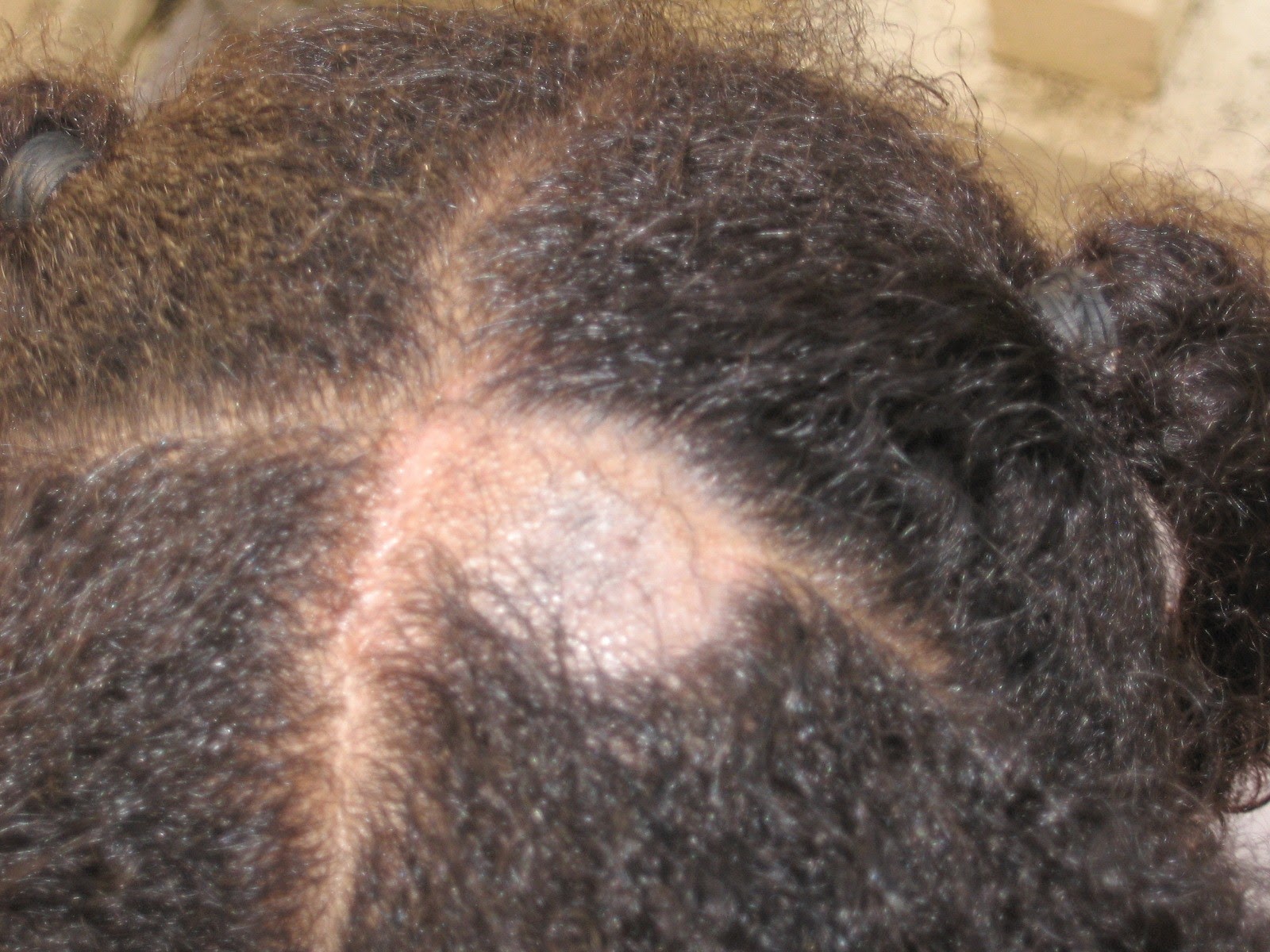
Certain types of auto-immune diseases, such as alopecia areata can now be treated by means of hair transplant techniques by using the donor strip method. Yet, in the future, hair cloning will make hair transplant easier for these people who often have very little hair to use for grafts.

Some people believe that hair transplant grafts using cloned hair would be about the same cost as the usual hair transplants that are available today. Other experts believe that the price will be much higher - perhaps three or four times per graft higher - because of the specialized methods required to do the work.

Hair cloning is most likely not as far away as one might think. It might be ready for use with hair transplant procedures as soon as a few years from now, or even sooner. If you are taking into consideration of getting a hair transplant but you want to wait awhile, hair cloning is something to chew on.

Hair loss is an Unfortunate Problem

The issue of Hair loss is in reality a very widespread topic and you can easily find umpteen numbers of compositions about hair loss on the web. Thus, there must be something different in this article to expect one to read it. You would have to read this article to find that difference.

It is an unlucky fact that numerous men, and an astonishingly high number of women, will experience from some form of hair loss during their lives and regularly that hair loss will be permanent. Since hair has been falling out of heads, medical science has been trying to discover the true cause of hair loss.

To understand fully hair loss we need to look at how hair grows and what factors can interfere with this natural process.

Hair growth occurs in two distinct phases, the growth phase known as the Anagen phase and the resting phase known as the Telogen phase. The vast majority of hair on our head (as much as 90%) at any one time is in a 2-7 year growth phase. The remaining hairs are in a resting phase that can last anywhere between two to four months.

A normal rate of hair loss is between 50 to 150 hairs a day. Once a hair has been shed that particular follicle begins a growth phase, as the lost hair now needs to be replaced.

If everything goes according to plan this cycle of growth and rest continues through many cycles during our life.

Hair loss problems can result when this natural cycle is disrupted and the natural fallout rate exceeds that natural re-growth rate. Additionally, certain factors can lead to hair re-growth that is much weaker and thinner than the previous hair that is being replaced.

Here the problem can go unnoticed for many years. Since each hair is being replaced there does not appear to be a problem. However, over the years each re-growth of shed hair is getting progressively weaker and thinner. In this case baldness and hair loss can appear to be a very sudden onset, but it is something that has been active for several years.

Fortunately from the point of view of being able to treat and prevent the problem, science has found the true cause of hair loss.

It is now believed that the cause of hair loss is an increased level of testosterone (that begins in puberty) that eventually leads to an excessive imbalance in another hormone DHT (dihydrotestosterone).

If there are large amounts of DHT present, blood supply to the hair follicle is reduced and over time the actual blood vessels that feed each hair follicle begin to shrink, making blood flow to the hair follicles even more difficult.

A deficient blood supply leads to weak, thin hair re-growth, which gets progressively worse over time. The eventual outcome is a growth that is little more than wispy short hair that is barely visible.

At this stage the person is suffering from a condition known as androgenic allopecia, more commonly known as male pattern baldness.

Specifically why and how these levels of DHT get to the level where they create a problem with hair loss is not known. At this point in time the cause is largely attributed to genetic factors.

Apart from our understanding of the causes of hair loss that is more or less permanent, there are several factors affecting men and women that can cause temporary hair loss.

Some of the more common cause of temporary hair loss are; scalp infections; improper use of hair care products; side affects of some medications and medical procedures (surgery and chemotherapy for example) and inadequate nutrition for healthy hair growth.

Usually once the cause of hair loss is established and the appropriate treatment given, hair growth can return to normal.

The most important factor in successfully treating any kind of hair loss is to determine quickly the correct cause of the hair loss and then immediately begin with the appropriate treatment.

For someone experiencing hair loss now or someone who could reasonably expect hair loss in the future based on past family medical history, preventive measures should be taken sooner rather than later.

At the very least an appropriate hair care regime should be in place. As part of this regime adequate nutrition should be stressed, including nutrients that have a known hair growth function such as Biotin, Zinc and the herb Saw Palmetto.

Nowadays there are many hair loss treatment options available. There is a range of natural over the counter preparations that have undergone some clinical trials and have had some success in stopping hair loss and promoting re-growth of normal healthy hair.

And if the natural way does not deliver the desired results, there are always hair restoration techniques such as hair extensions, hair transplants and wigs that offer even more options to treat hair loss.
This article about hair loss was meant to make you interested in the problem of hair loss and make you want to read more about it. And we hope that we have been successful in doing that.
Next previous home
Lets Share This!